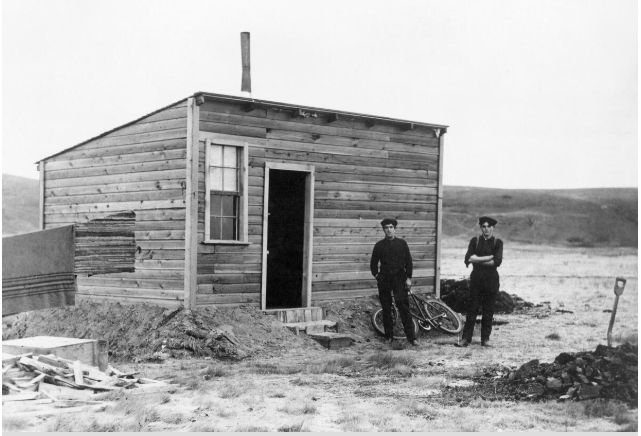
Celebrating Calgary’s Historic Bikes
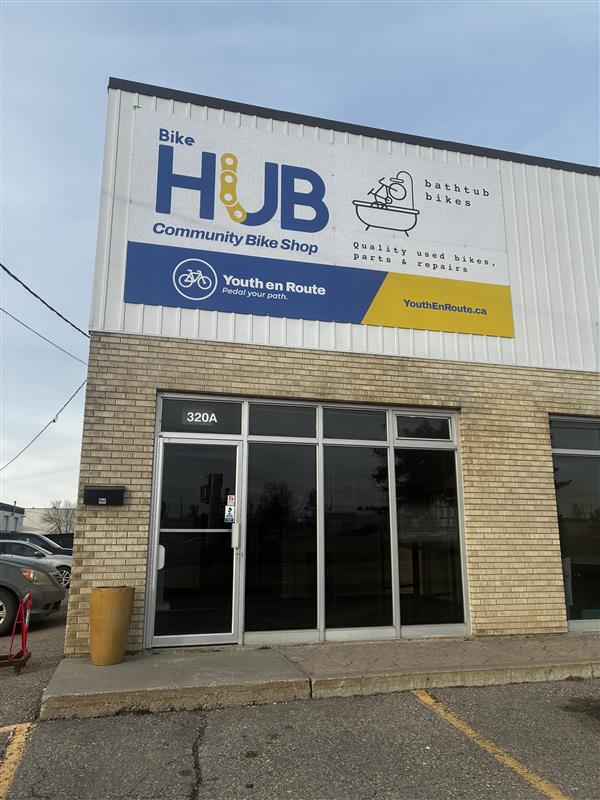
Calgary’s Tweed Ride, a partner ride with Bike Calgary and Historic Calgary Week, is a historic-themed bike ride where riders dress in their best old-fashioned and vintage outfits happened in early August. The destination was our Bike Hub – where riders could check out our cool vintage prints of Calgarians on bikes. We wanted to reflect on Calgary’s deep history of cycling stretching back to the founding of the community.
A piece of locally-made bike history
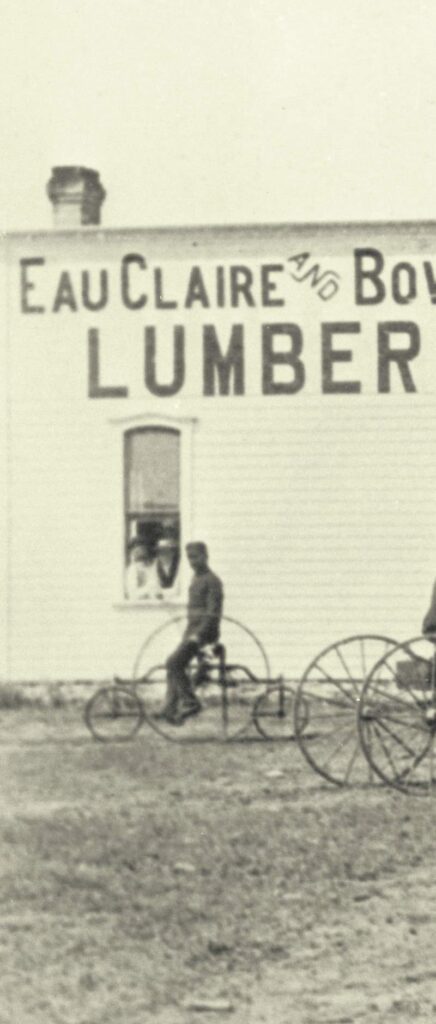
One of the earliest photos of Calgary’s long history with bike transport, this unique one-of-a-kind machine isn’t even technically a bike. Before the advent of what we might think of as a “modern” bicycle, high-wheeled cycles often referred to as “Ordinaries” or as we might know them better today, the penny-farthing, were considered by some to be unsafe and difficult to ride.
Designers, engineers and enthusiast started experimenting with ways to make cycling safer and more accessible. This led to the development of tricycles and quadricycles, one of which is likely pictured here.
Because of the increased space on the frame of a tricycle and the extra weight that came with it, designers were able to experiment with speed gears, where the pedals and wheels turned at different speeds. Eventually the technology was developed and implemented on later two-wheeled cycles, which lead to the drivetrain and gear ratios still used on modern cycles today.
While little is known about this specimen of the time, it was likely forged and welded by one of Calgary’s local smiths.
Premier Cycle Works: one of Calgary’s oldest bike stores
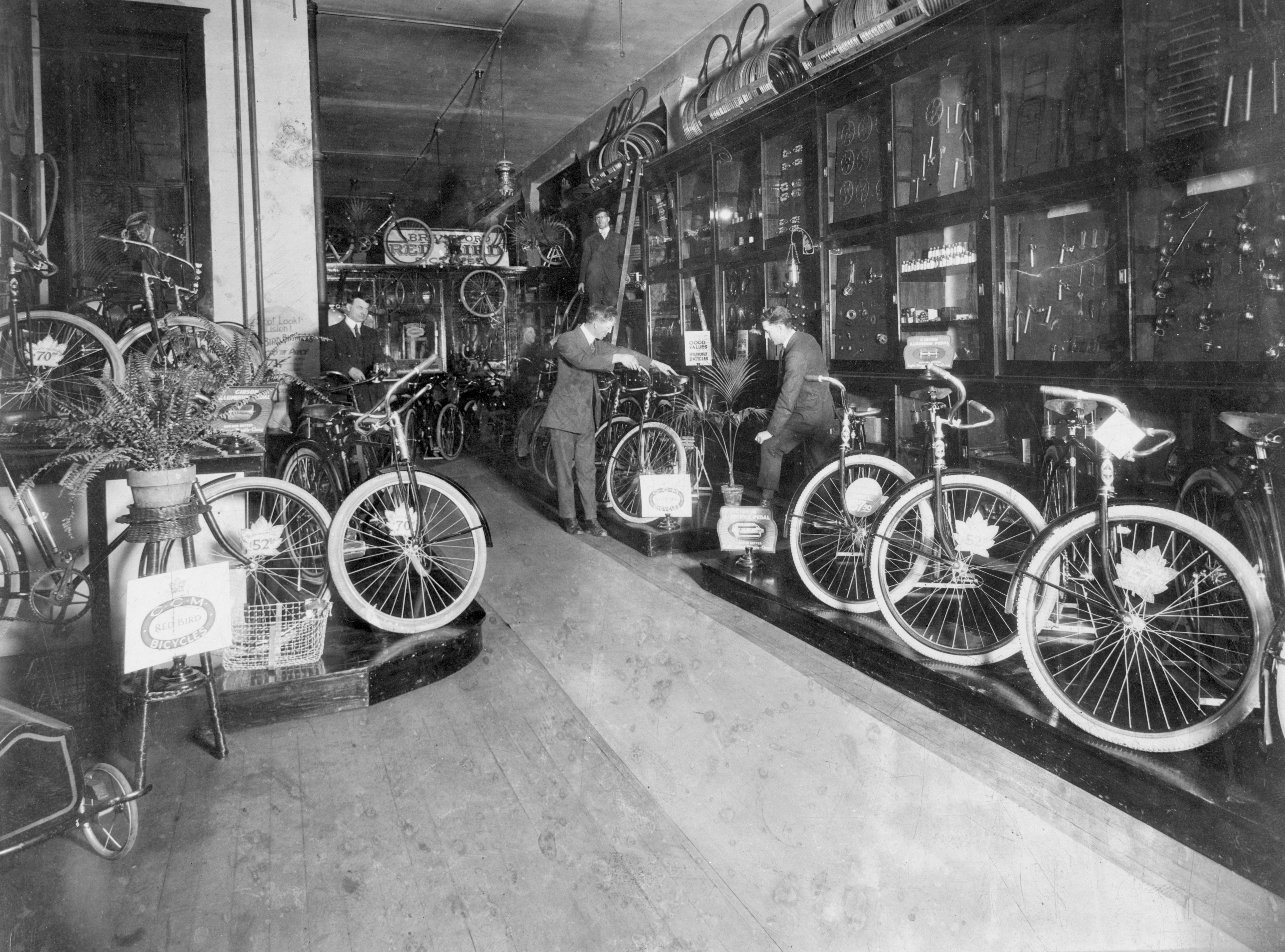
Premier Cycle and Sports was Calgary’s one-stop shop for outdoor hobbies. Founded in 1913 by Walter B. Compton, Premier Cycle ran for 60 years before it closed down following the retirement of its second and last owner, Ethan S. Compton.
Walter Compton’s store would start in 1913 as Premier Cycle Works. When his son Ethan took over in the late 50’s, he would rename the store to Premier Cycle and Sports — and include ski equipment and sporting gear among it’s stock. In 1969, the iconic store’s name would change one final time just years before Ethan’s retirement in 1973 to Premier Sports Calgary.
Ethan would also co-found Premier Ski School with his brother, Bruce Compton. Many older Calgarians have fond memories of learning to ski from the the brother’s lessons.
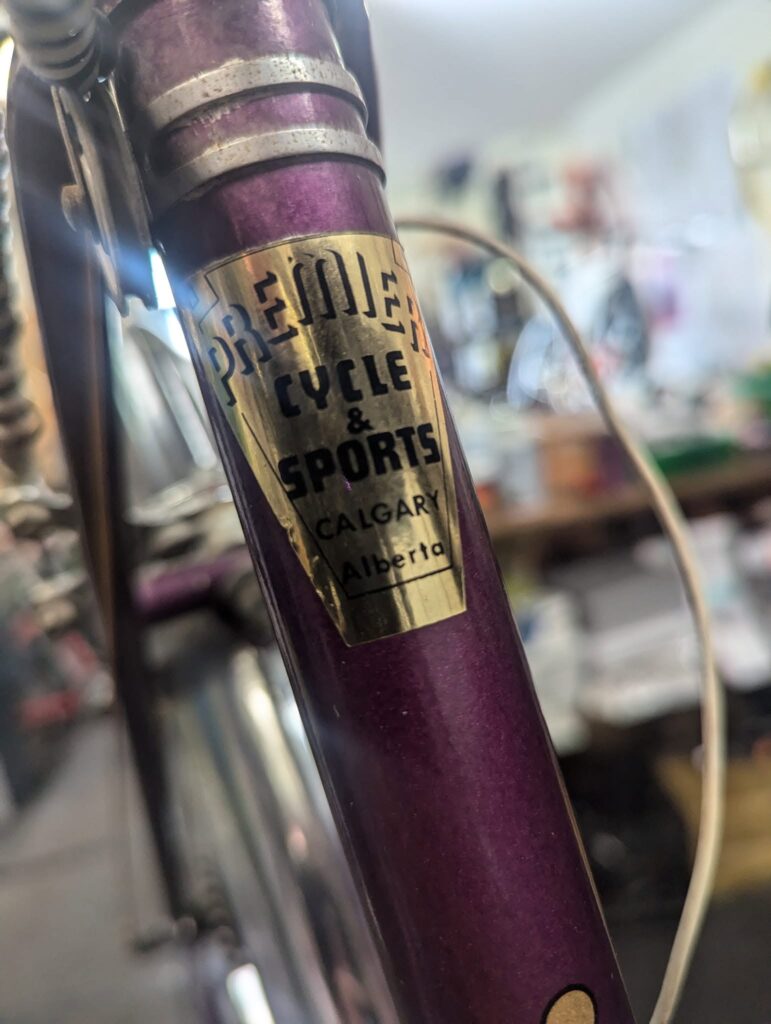
Some vintage CCM bikes from the era can still be found bearing the trademark sticker of Premier Cycle and Sports. The Bike Hub has one such unique bike in their collection, on display with the rest of our unique historical bikes.
Bikes on Calgary’s old streets
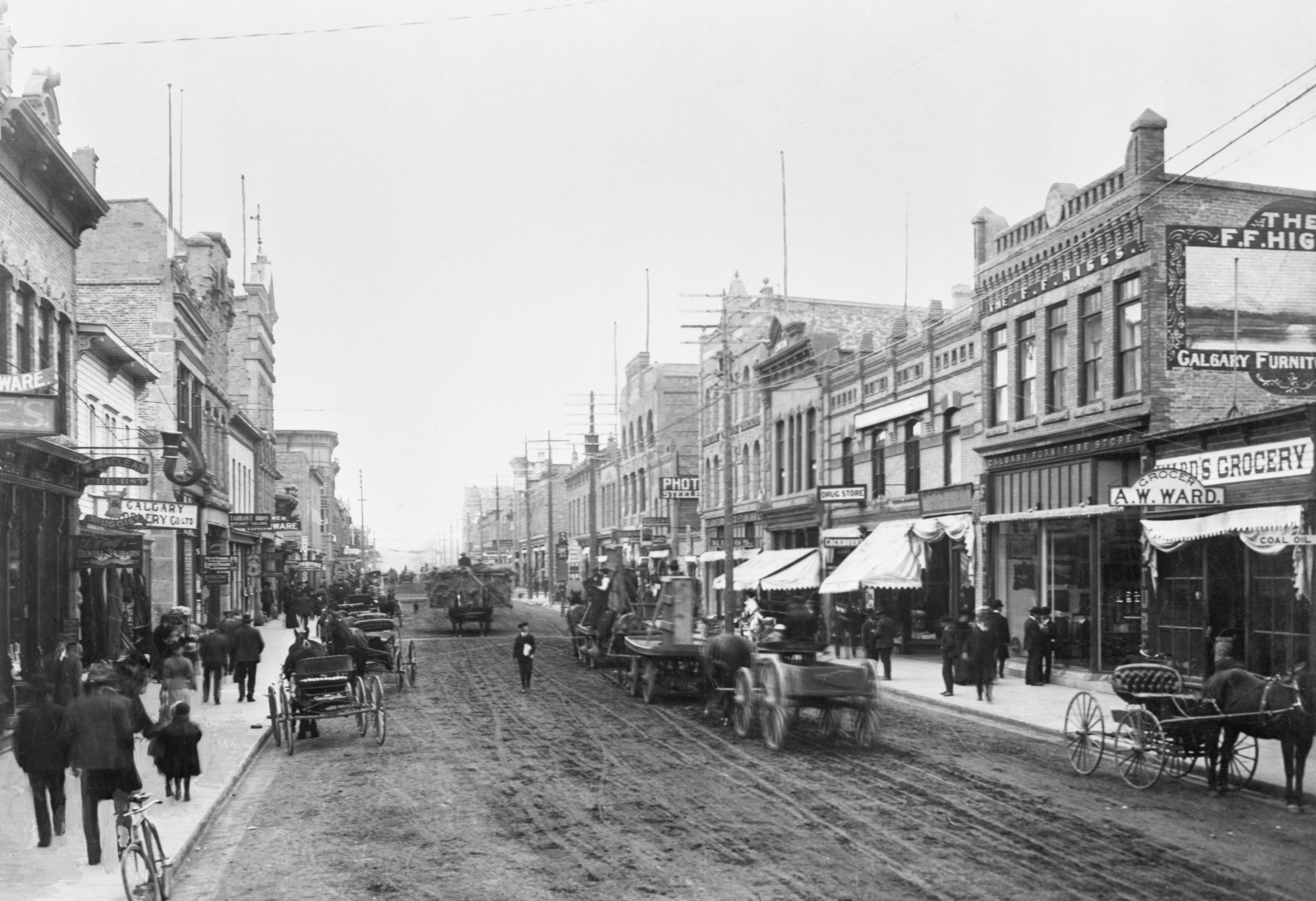
In 1914, most Calgarians still relied on the old horse and carriage to get around. Before the car became popular and widely available to Canadians, the bicycle served as a cheap and efficient means of transportation.
In the early 1900’s, bikes, cars, and horse-drawn carriages cohabited on Calgary’s streets. Three different technologies used for the same purpose, competing for infrastructure design to accommodate their needs.
In the coming years the car would become king, but bikes in Calgary didn’t just go away. Their affordability, efficiency, and versatility compared to other forms of transportation means they never became obsolete like the horse-drawn carriage that was so popular in 1914.
In the present day, Calgary sits at the center of Alberta’s oil and gas industry. The car has firmly established itself as the favoured means of transportation for Calgarians. But that doesn’t mean bikes don’t have a real, practical role when it comes to getting people around town. Bikes are almost always faster than public transit when it comes to short trips, and make getting between train stations and destinations a breeze. Dedicated bike lanes in downtown mean cyclists don’t have to deal with the jam of rush-hour traffic.
Part of Youth en Route’s mission is to educate people on how biking can be more than just for fitness or fun. It’s a practical transportation option that can save you money, time, and the headache that driving in Calgary can be.
*All photos are from The Glenbow Archives at the University of Calgary Library and Archives.