
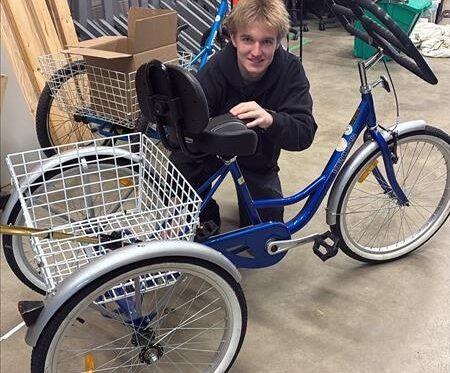
Engineering Co-op student working to improve YER’s adaptive trikes
Hi, I’m Sam, a Mechanical Engineering student at the University of Waterloo, Class of 2030. I’m passionate about biking, as a way to get around and as a lens for thinking about better, more sustainable transportation. My work and curiosity comes from that mix of engineering problem‑solving and a love for active mobility.
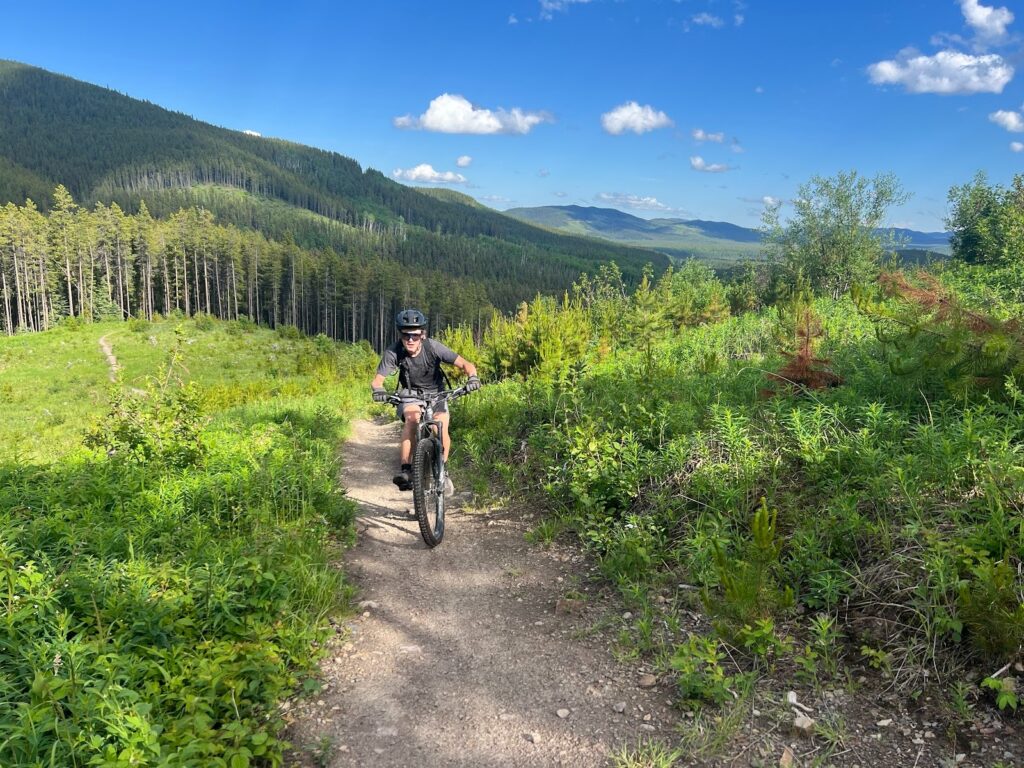
When I’m not buried in projects or co‑op work, you’ll probably find me in the gym, on a bike ride, or on the ski slopes.
Over the past month, I have had the opportunity to work with Youth En Route, supporting their adaptive cycling program across several junior high and elementary schools. I was able to visit different classrooms, assist with adaptive equipment, and see firsthand both the challenges and the progress involved in teaching alternatively-abled students to ride tricycles and bicycles. I look forward to continuing my work with Youth En Route.
Seeing Bikes in Action Helps Frame Design Goals
Working directly in schools provides insight that cannot be gained through design work alone. Every student interacts with adaptive equipment differently, and even small design decisions can have a significant impact on comfort, independence, and safety. Seeing students try, struggle, adapt, and eventually succeed highlighted how important thoughtful, practical design is in real learning environments.
A major focus of this Co-op term is to evaluate and improve the adaptive tricycle components developed by a University of Calgary Capstone team last year. The trike was finished in April, and the students graduated, so they didn’t have time to test the new trike in a classroom situation. That’s when YER opted to hire a mechanical engineering co-op student to take the technology to the next logical step. I’m fortunate to be able to take on this work in my first work te
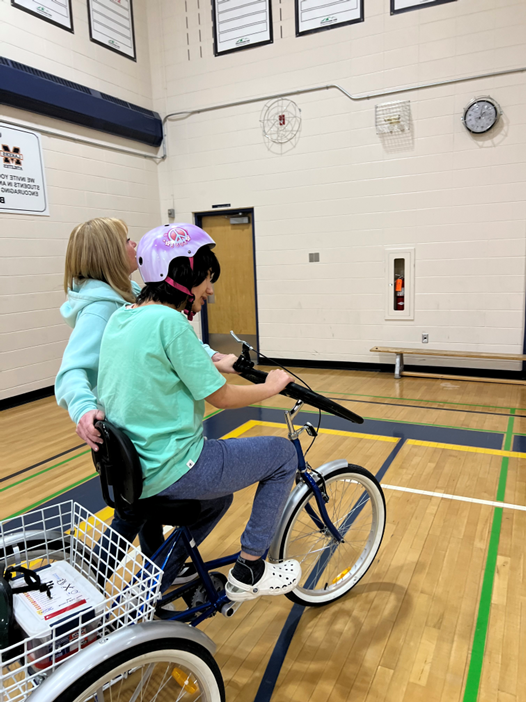
The capstone trike included specially designed handlebars, braking systems, pedal attachments, and drivetrain modifications. I observed students interacting with the equipment, understanding which hand positions they preferred, how easily components could be adjusted, and whether features promoted independence or required additional assistance from teachers or aides.
Improved Pedals, Handlebars, and Drivechain Types Make Riding Easier
Through this testing, several important insights emerged. While some adaptive features worked well in theory, in practice they weren’t used as intended. Extra hand positions on the handlebars were often ignored, fastening methods were easy to tamper with, and certain pedal attachments created delays during short class periods.
However, some designs clearly helped smaller riders, improved posture, or made transitions between activities easier. These observations reinforced the importance of designing for real-world use rather than ideal conditions.
The next phase of my work focuses on refining designs of the components that improve performance, such as ensuring the fixed to freewheel drive chain remain reliable, over long-term use in school environments. Real-world wear and tear matters, especially when equipment is shared across multiple classes and age groups.
Future of Adaptive Tricycles with Youth En Route
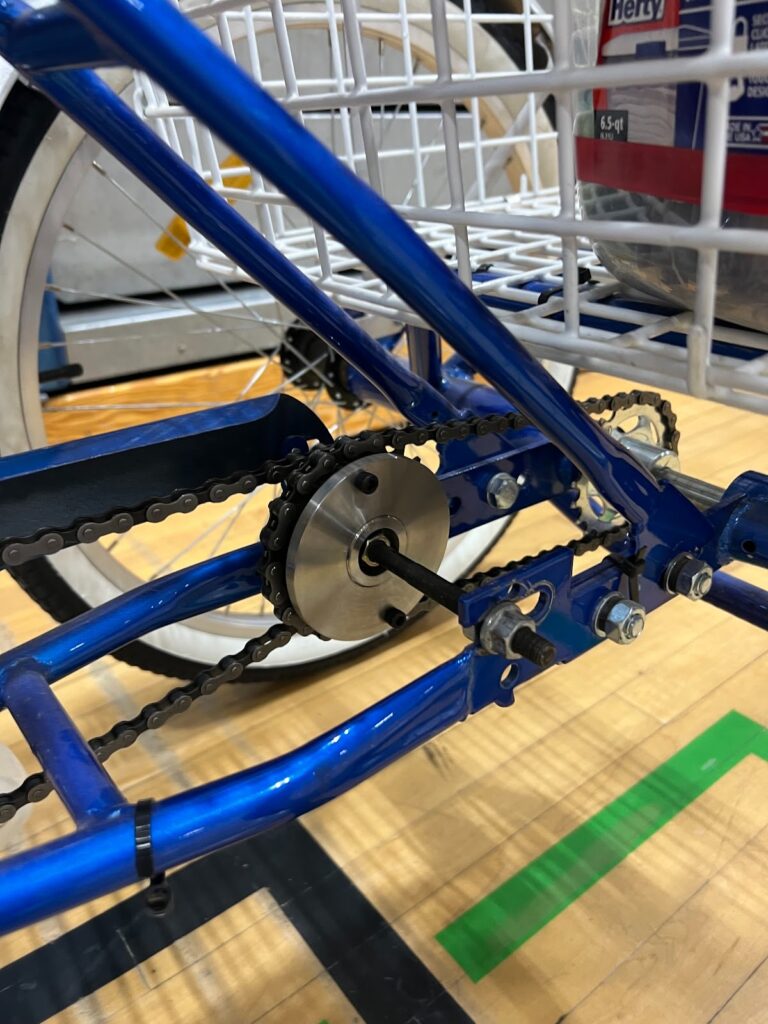
YER would like to produce additional fixed to freewheel couplers. Understanding the feasibility of ordering these parts in larger quantities will be important as the program grows and demand increases. Design improvements are also a key focus moving forward. The current handlebar setup will be revisited to remove unnecessary components and reduce redundancy. Improving the brake system is another priority, with an emphasis on exploring more tamper-resistant fastening methods that improve safety while still allowing educators to make necessary adjustments.
Finally, pedal compatibility with newer tricycle models will be evaluated. If the current attachments prove impractical, alternative solutions that reduce setup time and simplify transitions between riders will be explored. These steps aim to make adaptive cycling sessions smoother, safer, and more accessible for both students and instructors.
Empowering Special Education Students Offers Rewards
One of the most valuable aspects of this experience was understanding the challenges educators face. Teaching cycling skills to alternatively abled students requires patience, flexibility, and equipment that works reliably without adding complexity.
When a design slows down a class, requires frequent adjustments, or needs constant supervision, it affects not just one student but the entire group. Keeping this broader context in mind helped shape practical recommendations for improvement.
Seeing the ear to ear smiles of the kids I was working with is truly heart warming and has reminded me once again how fun biking can be. I hope my work can bring more smiles to schools across Calgary
If you ever want to connect, collaborate, or chat about engineering, mobility, or cycling, you can reach me at sam@youthenroute.ca.


